
The Sensex finished above the psychologically key 60,000-mark while the Nifty surged past the 18,000-level on Monday on across-the-board buying amid a mixed trend overseas. A depreciating rupee and concerns over the US Federal Reserve hiking rates later this week failed to quell investors' appetite for stocks, traders said. The 30-share BSE Sensex rallied 786.74 points or 1.31 per cent to settle at 60,746.59.

The 30-share Sensex closed down 114 points at 28,622 and the 50-share Nifty ended down 37 points at 8,686.

Despite two interest rate cuts from the Fed, concerns about the strength of the economy and the persistence of the credit crunch have so far kept high-yield bonds -- or junk bonds -- under pressure. Look at the closed-end funds, in particular. The gap between the value of the bonds held by these funds -- their net asset values -- and their market price is at historic highs.

Inflation data, both at domestic and global level, interest rate scenario in the US, geopolitical situation and general elections in 2024 are some of the major factors that would influence trading in the equity market this financial year, analysts said. Besides, foreign fund trading activity and global trends will also dictate terms in the equity market going ahead. Equity markets across the globe faced major challenges in FY23 due to concerns over high inflation, which resulted in increase in interest rates around the world, lowering investor sentiment, experts added.

Markets end higher ahead of Fed outcome, China stimulus
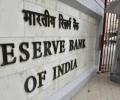
RBI is committed to bringing down retail inflation to eight per cent by January 2015 and six per cent by January 2016.

Unless there is a sharp uptick in oil prices, Fed may push back rate hike

Many analysts over the past week have said the RBI has legroom to cut rates to the tune of 65 bps by June and some like Barclays and BofA have also spoken about the likelihood of an inter-meeting cut.

Markets ended higher, amid firm global cues, and are on track for third straight day of gains.

The difference between what the banks play in the US and India is not that of soccer and football but rugby and football. SVB also has a unique character. But when risks are mispriced, the fallout could be very similar, points out Tamal Bandyopadhyay.

It's the first time in my memory that I have seen a negative expected return for equities, notes Akash Prakash. Hopefully, this implies the consensus is being too negative, and markets, as usual, will surprise everyone and deliver the least likely outcome.

From the Sensex pack, Bajaj Finance, Tata Motors, Asian Paints, Power Grid, NTPC, Infosys, Nestle, Reliance Industries and UltraTech Cement were the biggest laggards. Larsen & Toubro, Tata Steel, HDFC, Bharti Airtel, HDFC Bank and Mahindra & Mahindra were among the major gainers.

The demand for gold is expected to take a hit if the price of the yellow metal - which has been hovering around Rs 60,000, a level never seen before - remains elevated. Due to a sharp increase in price in a very short time and the flow of smuggled gold continuing, gold price in Mumbai is quoted at around Rs 59,000 per 10 gram. Typically, overall demand in the January-March and July-September quarters is moderate-to-dull, which is the case in the ongoing period.

Broader markets underperformed indices with BSE Midcap down 0.43% while the Smallcap index fell 0.07%.

The winter session of Parliament will commence on November 26.

'We have a plan to plough back a 'This year in the first half we had profits of more than Rs 31,000 crore.' significant amount of profits this financial year.' 'We have seen this organic plough back of profit is one of best ways to support the equity of the bank.'

Bajaj Finserv was the biggest gainer in the Sensex pack, rising 2.21 per cent, followed by Titan, ITC, Kotak Mahindra Bank, HDFC Bank, HDFC, Bajaj Finance, IndusInd Bank, ICICI Bank, HUL, Reliance Industries and Mahindra & Mahindra. Wipro, Tata Consultancy Services, Power Grid and Tech Mahindra were the laggards.

In the offshore non-deliverable forwards, the one-month contract was at 61.56/66, while the three-month contract was at 62.16/26.

There is an authenticity and sense of purpose about Dry Day which is appealing, observes Deepa Gahlot.

The government will unveil the Consumer Price Index data and the Wholesale Price Index data for August on Monday.

Adopting a wait- and-watch approach ahead of US Fed meeting

'While foreign institutional investor flows are still negative, they will turn positive in the latter part of 2023 as India's resilient growth becomes perceptible.'

The rupee had plunged by 48 paise, logging its biggest fall in more than five weeks, to close at over one-month low of 61.13 against the greenback on Monday following demand for the US currency from importers.

Global liquidity expected to continue amid ECB stimulus

India's largest cement firm, Ultratech Cement, has joined the race to acquire the Holcim stake in Ambuja Cements and its subsidiary, ACC. UltraTech - part of the Aditya Birla Group - submitted a non-binding bid on Wednesday. Swiss multinational Holcim, which manufactures building material, is exiting India by selling its 63.19% stake in Ambuja Cements. According to banking sources, UltraTech has submitted a plan to Holcim, outlining divestiture details that would meet the norms set by anti-trust body Competition Commission of India.

Equity indices chalked up losses for the second straight session on Monday, in tandem with a bearish trend overseas as ratcheting up of hostilities in Ukraine and prospects of further rate hikes by the US Fed soured global risk sentiment. The rupee slipping to another all-time low against the US dollar amid foreign fund outflows added to the gloom, traders said. After tumbling over 800 points in intra-day trade, the 30-share BSE Sensex clawed back some lost ground to end 200.18 points or 0.34 per cent lower at 57,991.11.

The breadth, indicating the overall health of the market, turned negative from positive

Historically, March has been a volatile month for Indian equity markets. To begin with, it marks the end of a financial year, wherein there is some compulsive portfolio rebalancing trade by large funds - domestic and foreign. Retail investors, too, prefer to 'cash in' on their gains and losses before the financial year runs out.
In a speech to the National Economists Club that echoed dovish comments by his nominated successor, Janet Yellen, Bernanke also said that while the economy had made significant progress, it was still far from where officials wanted it to be.

M&M was the biggest loser in the Sensex chart, falling 6.39 per cent, followed by Tech Mahindra, Nestle India, Bajaj Finance, Axis Bank, ITC, JSW Steel, HDFC Bank and RIL. On the other hand, Sun Pharma, Tata Motors, Bharti Airtel, L&T and Infosys were among the winners, rising up to 2.10 per cent.

Commodity investments can help you diversify your portfolio in asset classes other than equity and debt, says Dwaipayan Bose.

The broader NSE Nifty too fell below the 10,100 level by dropping 100.10 points to end at 10,094.25

Gold, the safest haven amid the ongoing uncertainty, also emerged as one of the most lucrative investment options in financial year 2022-23 with an impressive return of 16.1 per cent in rupee terms, and 2.3 per cent returns in dollars. And, had it not been for the very high inflow of smuggled gold and the huge discount prevailing in the market due to high prices, the returns in gold would have been much higher, analysts said. The precious metal has consistently been delivering positive returns in India since 2016.

Summers dogged by controversies over past views

Sharp swings likely in equity, forex and bond markets.
Since the burden of 'reserve' tax has fallen primarily on SMEs as they depend on bank finance, a further hike in its Cash Reserve Ratio will definitely hit the SMEs and small savers.

The RBI's next policy review is set for Sept. 29.
Dried up liquidity, interest rate hikes and the resultant slump in consumption may slow down economic growth in the near term, according to the JM Morgan Stanley report for November 2005.

Continuing their selling spree for the sixth consecutive month, foreign investors pulled out a massive Rs 41,000 crore from the Indian equity market in March on anticipation of rate hikes by the US Federal Reserve and deteriorating geopolitical environment amid the Russia-Ukraine war. Further, flows from foreign portfolio investors (FPIs) are expected to remain volatile in the near term given the headwinds in terms of elevated crude prices and inflation, experts said. According to data available with the depositories, FPIs were net sellers to the tune of Rs 41,123 crore in the equity market last month.

Indian markets may see some weakness in stocks post Fed hike.
 © 2026 Rediff.com - Advertise with us - Disclaimer - Privacy Policy - Sitemap - Feedback - About us - Terms of use - Grievances